We use cookies on this site to enhance your experience.
By selecting “Accept” and continuing to use this website, you consent to the use of cookies.
April 9, 2026
Print | PDFConcluding this year's public lecture series with the Brant Land Trust, Gerald Tetreault spoke about how wastewater effluent can disrupt fish biology and how major upgrades to the Waterloo and Kitchener wastewater treatment plants led to meaningful improvements in fish health and river ecology more broadly.
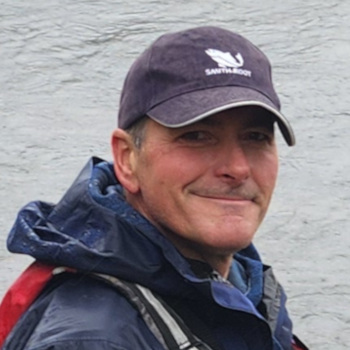
Gerald is a Research Scientist, specializing in aquatic contaminants, at Environment and Climate Change Canada. A product of the Grand River watershed, he earned his BSc at the University of Guelph before moving to the University of Waterloo for his MSc and PhD. In addition to the research highlighted in this lecture, his work focuses on the Canadian Great Lakes Areas of Concern, the Athabasca Oil Sands, and the bioaccumulation of compounds in food webs.
This lecture was the final lecture in the Examining Our Relationship with and Responsibilities to the Land public lecture series, presented by the Brant Land Trust in collaboration with the Laurier Institute for Water Science. The other lectures in the series included Laurier Professor Emeritus Gary Warrick, with his talk: The Grand River as an Indigenous Landscape and Jack Imhof, with: The Challenges with Urbanization and Protection of Water and Aquatic Environments.